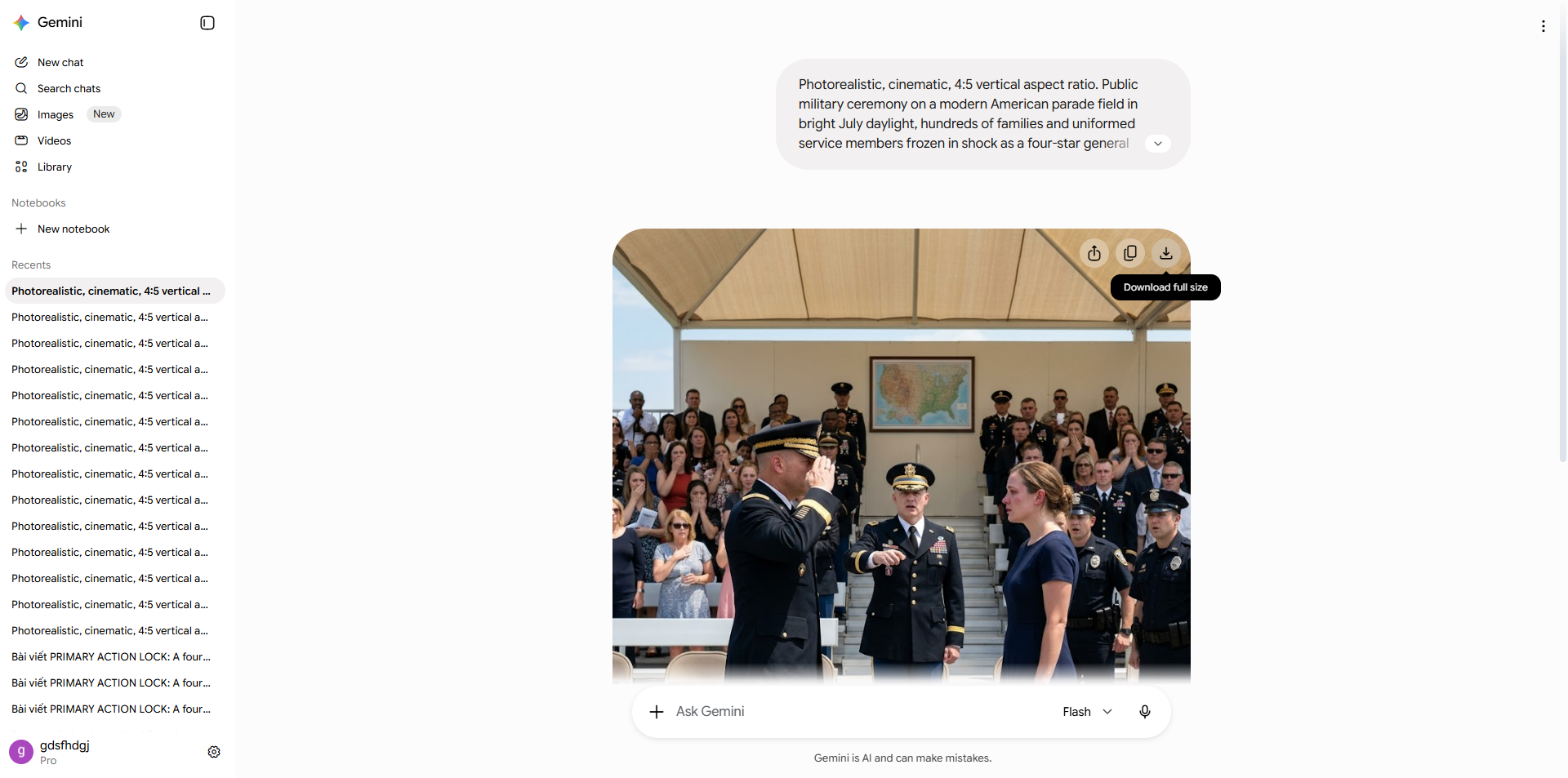
My father-in-law, a brigadier general, ordered military police to remove me from the parade field in front of hundreds… until a four-star general arrived, looked at me once, and whispered the words that turned the whole ceremony ice-cold.
“This is Reaper-Two.”
After that, nobody looked at me the same way again.
The military police closed in before the last notes of the anthem had even faded over the parade field.
July heat shimmered above the asphalt. The air smelled like fresh-cut grass, sunscreen, hot dress uniforms, and the sharp metallic flash of medals catching the sun. Families froze halfway through their applause. Cadets stood stiff as fence posts. A little boy in the front row lowered his tiny paper program and stared at me like he had just watched the whole ceremony split in half.
In the middle of that silence stood my father-in-law, Brigadier General David Whitaker.
And he was pointing straight at me.
“Escort that woman off this installation,” he said, loud enough for the reviewing stand, the family bleachers, and every uniformed officer on that field to hear. “Now.”
For a second, nobody moved.
Not because they thought he was wrong.
Because on that base, David Whitaker’s voice carried the kind of weight that made people think about promotions, evaluations, command climate, and future assignments before they remembered basic human decency.
I stood there in a simple navy dress, sweat gathering under the collar, one hand wrapped around a sealed envelope I had not opened since 12:07 p.m. My husband, Captain Michael Whitaker, stood three rows away from me in his dress uniform. His jaw was locked so tight I could see the muscle twitching near his ear.
He did not step forward.
His mother stared at the flagpole.
His younger sister smiled into her plastic cup like humiliation was something best served cold.
“This woman has no clearance,” David continued. “She is not welcome here. And she is no longer part of my family.”
The first military policeman took a step toward me. Young. Nervous. Trying hard to make his hands look steadier than his orders. His name tape read MARTIN.
I saw the math move behind his eyes.
A senior officer’s order. A public parade field. A general watching. A woman in a navy dress who looked, to everyone around her, like the least dangerous person at the entire ceremony.
So I took the choice away from him.
“Sergeant,” I said quietly, “I’ll walk if you ask me to. But today, I would strongly advise you not to put your hands on me.”
His face changed.
Not fear.
Recognition.
There is a tone military people hear immediately. A calm voice trained far beyond panic. A voice that does not rise because it has already learned what happens when everyone else starts yelling.
David heard it too.
Unfortunately for him, he mistook control for weakness.
“Listen to her,” he said, turning just enough for the crowd to see him. “Six years of this nonsense. She married my son and suddenly thinks she has the right to stand anywhere near military business.”
Whispers moved through the bleachers. Ceremony programs rustled. Somewhere behind me, a folding chair scraped against concrete and stopped halfway through the sound, as if even the chair understood it was safer to be quiet.
“She was waiting tables when Michael found her,” David added, now smiling. “Now she walks around like she matters.”
I did not answer.
That always bothered him most.
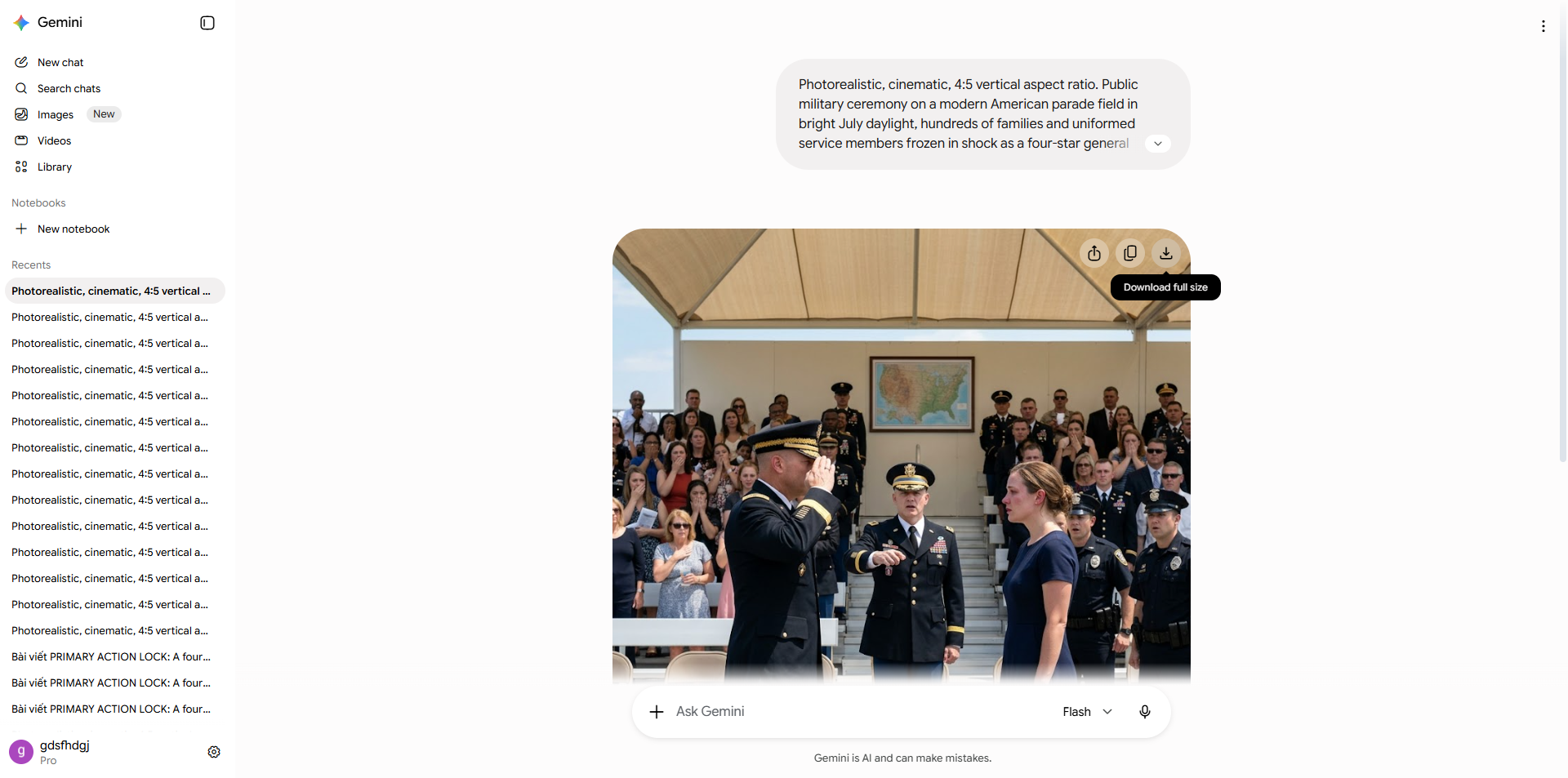
To David Whitaker, I was Sarah Bennett-Whitaker, the woman he tolerated at Thanksgiving, corrected at dinner, and introduced only when there was no polite way around it. He never asked where I disappeared during long consulting contracts overseas. Never asked why certain people in windowless offices answered when I called. Never asked why I always sat facing doors, counted exits, and woke up with my hand reaching for something that had not been beside me in years.
Powerful men often confuse what they do not know with what does not exist.
To him, I was embarrassment attached to his son’s last name.
What he did not know could have filled locked rooms.
That was when the black SUVs rolled slowly onto the edge of the parade field.
Quiet.
Clean.
Unhurried.
The way people arrive when senior officers start turning their heads before anyone explains why.
My pulse slowed when I saw the small placard on the lead vehicle.
Four stars.
The band stumbled on a transition. Conversations died row by row. Officers straightened like an invisible wire had been pulled through every spine on that field.
David turned. Irritation flashed across his face, but he buried it quickly under his polished command smile.
The rear door opened.
General Daniel Hayes stepped out.
Everyone on that parade field seemed to understand his weight in one second. Four stars. Command authority. The kind of reputation brigadier generals do not interrupt, correct, or make wait.
David moved toward him.
General Hayes barely looked at him.
His eyes swept over the crowd, past the reviewing stand, past the military police, past Michael frozen in a row of dress uniforms.
Then they landed on me.
The change in his face was so sudden it felt like someone had pulled the air off the field. The color drained from his cheeks. His mouth opened slightly, like he had forgotten the first word of a sentence he had carried for years. His eyes dropped to the sealed envelope in my hand, then lifted back to my face.
The military police stepped back before anyone ordered them to.
Michael’s expression cracked.
David’s smile began to die.
General Hayes walked straight past my father-in-law and stopped a few inches in front of me.
The entire parade field went so still I heard that little boy’s program slap against his knee.
Then the four-star general raised his hand to his brow.
A full military salute.
My father-in-law went pale.
And General Hayes opened his mouth and whispered…
Part 2 below 👇👇
Part 2: “Reaper-Two.”
He said it so softly that only the front rows should have heard him, but silence has a way of carrying the words no one wants repeated.
The young sergeant beside me swallowed hard and backed up another step. His hand dropped from his belt like the leather had burned him. Behind the reviewing stand, an aide actually lowered his clipboard. Michael stared at me with the face of a man realizing he had been sleeping beside a locked door for six years and never once asked what was behind it.
David tried to recover first.
“General Hayes,” he said, forcing a laugh that landed dead on the pavement, “there must be some misunderstanding. My daughter-in-law is a civilian.”
Hayes did not take his eyes off me.
“Was,” he said.
That one word did more damage than any shouting could have done.
Then his aide stepped forward with a second envelope I had not seen before. Black border. My maiden name typed across the front. Under it, one line stamped in red: COMMAND WITNESS FILE.
My mother-in-law’s cup slipped in her hand. The ice rattled so loudly half the bleachers turned toward her. Michael’s sister stopped smiling. And David Whitaker, who had spent six years treating me like a stain on his family name, looked at that envelope like it had just started breathing.
General Hayes lowered his salute slowly.
“Sarah,” he said, and for the first time his voice almost broke. “Do they know what you did outside Kandahar?”
The sealed envelope in my hand felt suddenly heavier.
David whispered, “What is this?”
General Hayes turned toward him at last, and the look on his face made every officer on that field stop breathing.
Then he said, “Brigadier General Whitaker, before you give another order, you need to understand who you just tried to remove from this field…”
Part 3 and full ending: Type “PART 3” and Press “Like” so we can post the full story. Thank you!
If you don’t see it, switch to Newest/All.
Leave a Reply